
- Home
- PRODUCT CENTER
- ABOUT US
- BLOG
- Application
- FAQ
- CATALOGUE
- Contact Us
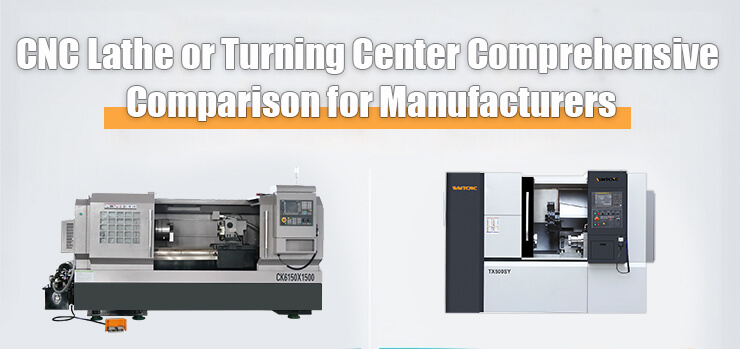
What is CNC Turning? It is a subtractive manufacturing process. Raw material (most often bars) is rotated in a chuck while a cutting tool shaping it into a part. Modern CNC turning utilizes advanced computer programming for high precision, repeatability, and capacity for complex geometries. CNC systems are the clear choice for automated control.
CNC turning technology has its origins in manual lathes used as early as 1300 BC in Egypt. Lathes were refined during the Industrial Revolution for greater productivity. The pivotal advance was the introduction of numerical control (NC) from 1940 to 1950. Today, modern CNC turning integrates advanced electronics and programming for unthinkable levels of accuracy and speed.

CNC turning starts with a CAD file. CAM software converts it into machine code, ensuring the machine reliably reads and follows these instructions to ensure every cut matches the digital model.
Flatbed Lathes: Traditional and robust, ideal for heavy-duty, high-stability operations and large parts.
Slant Bed Lathes: Feature inclined beds, offering better chip removal, faster production, and compatibility with automation.
Vertical Lathes: The spindle is vertical, making them ideal for large, heavy workpieces and gravity-assisted clamping.
Horizontal Turning Centers: Popular for their versatility, longer beds, and support for tailstocks. Suited for small to medium parts.
Vertical Turning Centers: Compact footprint and ideal for large, heavy, or awkwardly shaped workpieces.
Swiss-Type Lathes: Specialized for high-speed production of small, complex parts, especially in medical and electronics sectors.

CNC lathes and turning centers are both precise, but turning centers are better with more complex parts and higher production volumes. Lathes are better for simpler, cylindrical parts in lower quantities.
Turning centers often incorporate live tooling, sub-spindles, and Y-axis movement. They can perform drilling, milling, and tapping in a single setup.
CNC lathes are less expensive to purchase but may incur higher operational costs for complex jobs. CNC turning centers have higher initial costs but offer lower operational expenses and faster ROI for high-volume, complex projects.
| Feature | CNC Lathe | CNC Turning Center |
|---|---|---|
| Number of Axes | 2 (typically) | 3, 4, 5, or more |
| Automation Level | Basic/Moderate | Advanced (multi-tasking) |
| Tooling | Limited turret | Live tools, sub-spindles |
| Complexity | Moderate | High |
| Production Volume | Low to medium | Medium to high |
| Setup Cost | Lower | Higher |
| Operational Cost | Higher (complex parts) | Lower (complex parts) |
| Part Types | Simple, round/cylindrical | Complex, multi-featured |
| Typical Price Range | $30,000 – $150,000 USD | $50,000 – $500,000+ USD |
| Industries Used | General manufacturing | Automotive, aerospace, medical |

Key parameters in CNC turning include:
CNC turning accommodates a wide array of materials:
Selection depends on part function, required strength, and machinability.
External: Turning, facing, taper turning, grooving, parting.
Internal: Drilling, boring, threading, knurling, reaming.

Modern CNC machines support sustainability. They improve material usage, reduce waste, and allow for chip recycling. They also have eco-friendly coolants and energy-efficient designs.
While the initial high costs are high, there are benefits. The machines improve efficiency, quality, and labor savings. This makes a strong return on investment, especially for high-volume or complex projects.
CNC turning is the foundation of advanced manufacturing. It evolves with new technologies and rising demands for precision, complexity, and efficiency. In today’s highly competitive markets, selecting the optimal turning solution is paramount. This could be a basic CNC lathe or an advanced turning center. Make the right choice, and you will ensure your success. Make the wrong choice, and you will stagnate. CNC turning is the cutting edge of smart manufacturing, driving innovation across every major industry.
Explore the advantages of CNC turning and milling technology, including its applications in industries like aerospace, automotive, and healthcare. This guide also provides valuable insights for selecting CNC turning center suppliers to help optimize your purchasing decisions……>>Read more
Learn how to identify and fix common tool post issues in CNC lathes, including problems with indexing, rotation, and locking. This guide offers practical solutions for operators using China automatic CNC lathes and small CNC lathe machines, ensuring optimal performance and precision……>>Read more
A CNC lathe machine is an advanced machining tool that automates the turning process through programmed instructions. It plays a crucial role in modern manufacturing by producing precise cylindrical components and complex geometries with high efficiency……>>Read more
Learn how to select the perfect lathe machine for your project by considering essential specifications such as swing over bed, distance between centers, motor power, and spindle speed. Whether you need a CNC lathe, bench lathe, mini lathe, or heavy-duty lathe, this guide will help you make an informed decision. WMT CNC offers a wide range of CNC lathes and machines for various applications……>>Read more
Selecting the right CNC metal lathe supplier is crucial for ensuring machining accuracy, production efficiency, and long-term business success. With years of expertise and a commitment to excellence, WMT CNC is a trusted global supplier of high-quality CNC metal lathes. Here’s why…… >> Read more


